






Treatment of Dental Caries
Each of you have heard, and probably encountered, dental caries in one form or another.
It is the most common and widely spread chronic disease on a global scale. Caries is a process involving demineralization and destruction (decay) of the hard dental tissues – enamel, dentin, and cement, as a result of bacterial activity.
Following the trends and developments in modern medicine, we at Vaya Dent Dental Clinic focus on a minimally invasive approach in treating dental caries. Our therapeutic protocols depend on the severity and extent of the process.
For superficial caries, only enamel treatment is sufficient. This can be done through remineralization using special pastes and gels, which mineral composition helps in the restoration of the cavity, or through infiltration using preparations known as “liquid fillings.” These modern treatment methods are extremely gentle and painless.
In more advanced stages of caries, treatment involves complete removal of the damaged tissues and their replacement with dental materials – so-called “filling.”
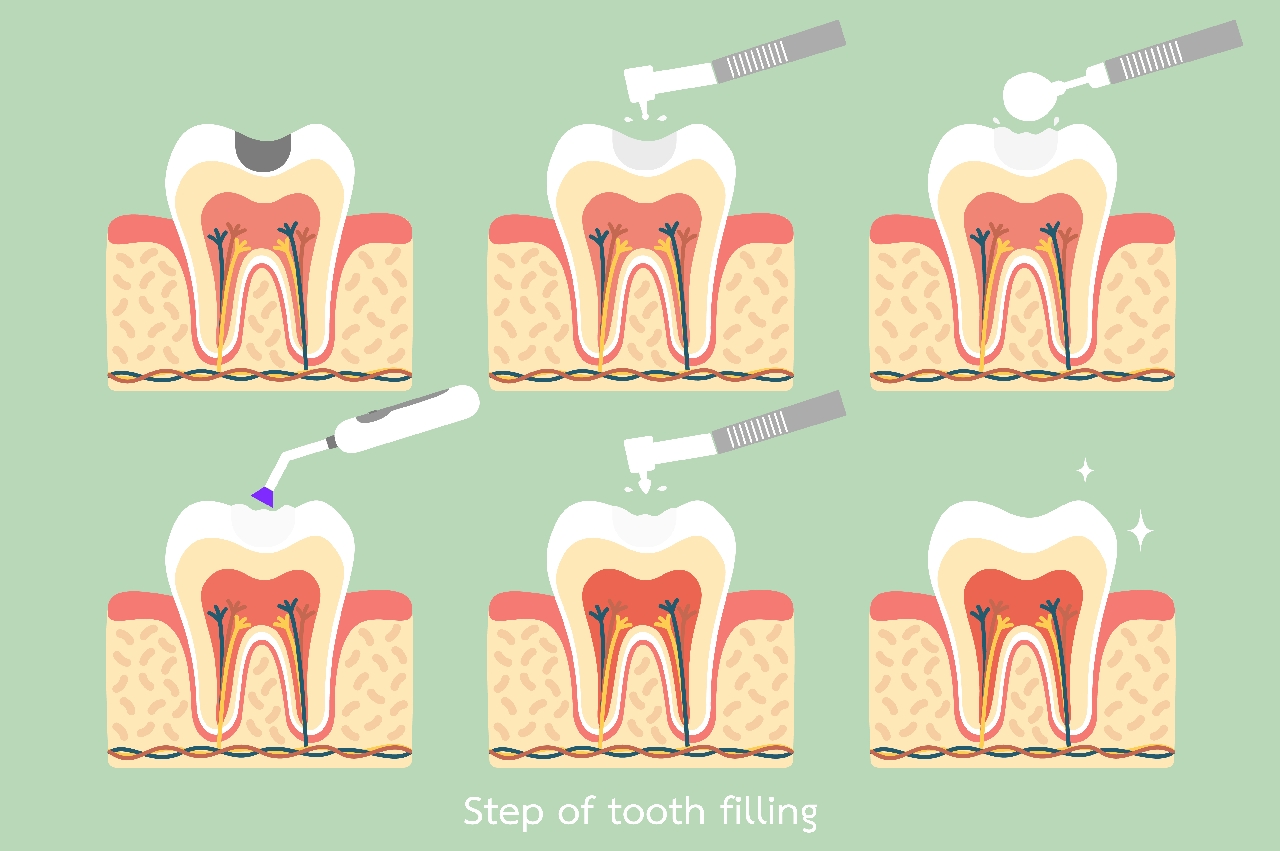
There are two main methods for restoring the decays:
1. Direct method – in which the filling is placed directly in the patient’s mouth using composite materials, restoring the natural anatomy of the tooth by the dental medicine doctor. We use high-quality aesthetic filling composite materials for caries treatment (GC, Japan; Voco, Germany; 3M, USA, etc.).
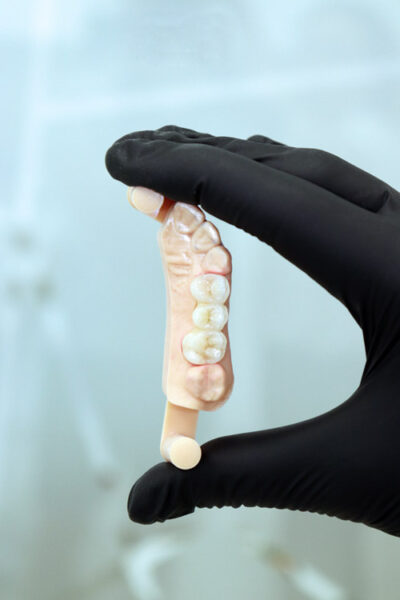
2. Indirect method – in which the shape, function, and aesthetics of the tooth are reconstructed after taking a preliminary impression. In our practice, this is done by scanning the jaws with a digital intra-oral scanner. In laboratory conditions, a model of the patient is made, and on it, a dental technician designs the restoration known as inlay/onlay overlay (according to the scope), which is subsequently cemented to the tooth in the dental office. At the moment, we work with composite and ceramic indirect restorations.
Both methods for treating advanced caries have their advantages and disadvantages, indications, and contraindications. To understand which is the optimal option and to receive specific information about your problem, schedule an appointment for examination and consultation with us!
Caries is a multifactorial disease. It is believed that its occurrence is mainly influenced by the level of resistance of dental enamel, the presence of dental plaque, and certain microorganisms in it, which lead to increased acidity in the oral cavity. Other important factors are the composition and quantity of saliva.
In the initial stage of caries, a chalky spot is often observed on the surface of the dental enamel. With the progression of the process into depth, the color of the spot becomes darker and more intense, until cavity (cavities) are formed in the damaged dental tissues.
In its initial phases, dental caries progresses asymptomatically. The first main symptom noticed by patients is a short-lived sharp pain from sweets, which is later accompanied by pain from cold.
Another typical complaint is food retention in the tooth, which is due to the formed carious cavity. Unpleasant breath odor may also occur.
All of this leads to various disturbances in chewing and aesthetics. In the absence of treatment, the frequency, duration, and intensity of pain progressively increase, which is a sign that one of the characteristic complications of dental caries is developing.
If caries is not treated on time, the destruction deepens and affects the deeper dental layers. It can thus reach the inside of the tooth, where the pulp is located, and lead to many more severe conditions such as pulpitis, gangrene, periodontitis, abscesses, etc., whose treatment is significantly more complex.
Prevention of dental caries primarily involves effective cleaning of the teeth with a brush, paste, and dental floss, a rational diet low in carbohydrates, and providing optimal amounts of fluoride. The importance of regular preventive dental check-ups should not be underestimated.