






Endodontic Treatment
Endodontics is the part of dental medicine which focuses on treating diseases of the dental pulp. Typically, the development of these conditions stems from untreated caries, specifically its complications (pulpitis, periodontitis, etc.).
Our goal is to maintain teeth as vital (“alive”) whenever diagnosis and condition allow. In cases where this isn’t possible, endodontic treatment becomes necessary, also known as “root canal” treatment or the so-called “revitalisation” of the tooth.
The pulp is located inside the teeth, beneath the dentin and enamel. It consists of nerve endings, blood vessels, and other tissues performing various functions. Through channels in the roots of the teeth, it connects to the jawbone.
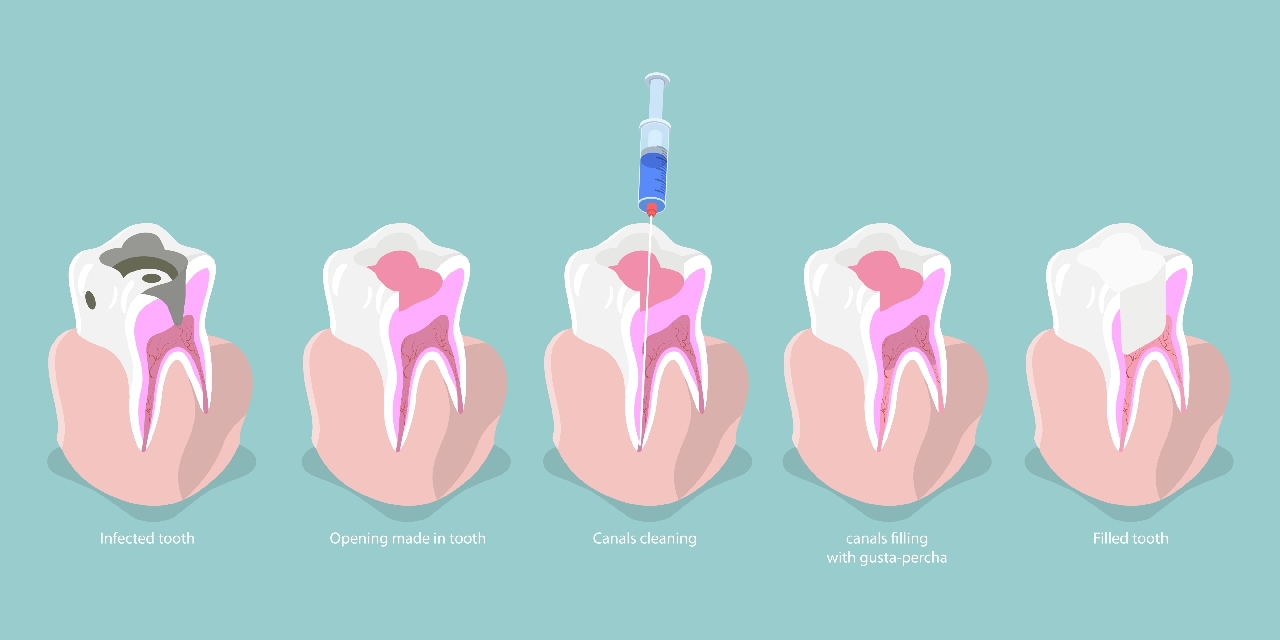
Endodontic treatment involves the removal of the dental pulp from the root canals and its replacement with suitable biocompatible materials. Its primary objective is to eliminate bacterial infection and preserve the compromised tooth.
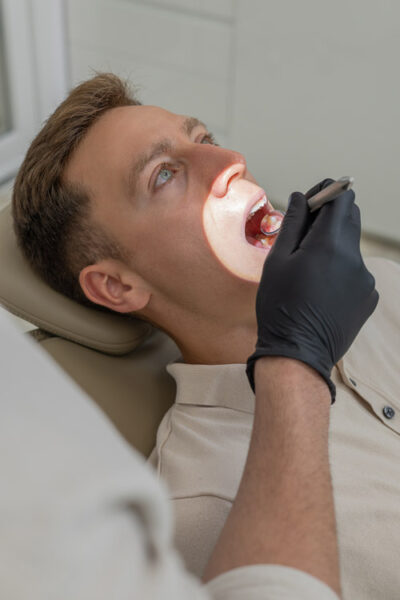
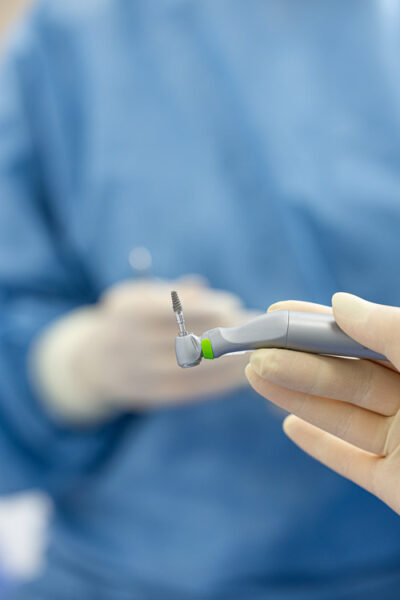
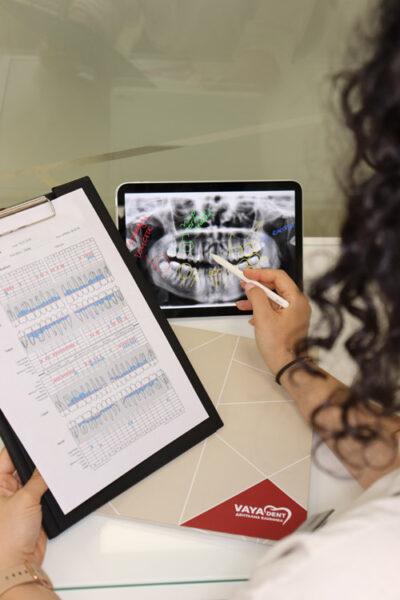
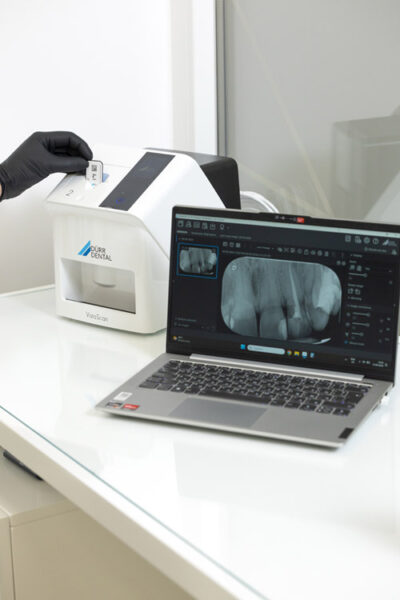
Endodontic therapy performed by us adheres to the most modern standards. For effective, quality, and comfortable treatment, we isolate the problematic tooth with a special sheet – rubber dam, ensuring maximum sterility during the procedure. We clean the root canals using manual and mechanical instruments with an endodontic motor, and to monitor the procedure, we use an apex locator and sectional radiographic examinations.
It’s important for every patient to recognize the signs indicating the need for endodontic treatment. Pain is primarily indicative. Root canal treatment is usually required in the presence of severe pain during chewing and touching, spontaneous or nighttime pain, increased sensitivity to heat and cold persisting for a long time, swelling in the area of the tooth, and more. The most common reasons for these symptoms are:
1. Dental caries and its complications, leading to infection of the dental pulp
2. Traumatic incidents – chipping of part of the tooth, deep cracks, etc.
3. Thermal or chemical damage to the pulp.
Endodontic treatment may also be necessary in certain cases where symptoms are not clearly expressed, such as before prosthetic restorations or when revision of previously unsuccessful treatment is needed.
The greatest benefit of endodontic treatment is the ability to preserve the patient’s natural tooth. Other advantages include maintaining normal chewing function, unchanged appearance, and protection of adjacent teeth from damage, being worn off, or displaced.
Root canal treatment is often financially more advantageous than the alternative of extracting the problematic tooth. To restore normal chewing and aesthetics, the missing tooth would need to be replaced with an implant or bridge, which are usually considerably more expensive.
First, the diagnosis is placed after a thorough examination and with the help of various tests. Then, if necessary, local anesthesia is administered. The tooth is isolated from the oral cavity, and the “opening” is made through the crown to provide access to the dental pulp.
The next step is the removal of nerves and treatment of the root canals – they are widened and disinfected using special instruments and solutions. Then, the canals are filled (temporarily with a medicine for additional disinfection or permanently with biocompatible materials), and at the end the tooth is restored with the appropriate type of restoration.
Treatment can be completed in one or several visits depending on the initial diagnosis.
Root canal treatment is intended to remove the pain! In most cases, especially when anesthesia is applied, there is no sensation beyond the usual, during routine dental procedures.
During the first few days after the procedure, you may experience sensitivity, especially if the tooth was highly inflamed before. This discomfort can be managed with various medications.